Higher pay is no longer enough: The Hungarian labour market is playing by new rules

Most important results on the Hungarian labor market based on our questionnaire research.

For years, changing jobs was widely seen as the most reliable way to secure a higher salary and better career opportunities. However, Enloyd's Specialists' and Managers' Activity in the Labour Market 2026 report suggests that the Hungarian labour market has entered a new phase. Employees' career decisions are no longer driven solely by compensation, while companies have also become more cautious in both hiring and salary planning.
The research shows that although competition for talent remains intense, success is no longer determined by salary alone. Leadership quality, organisational stability, flexibility and employee wellbeing are becoming increasingly important factors.
Changing jobs no longer guarantees a higher salary
One of the most striking findings is that changing employers has lost its status as a "safe investment." Among respondents who changed jobs within the past year, only 43% reported receiving a salary increase, 42% said their salary remained unchanged, while 15% accepted a lower salary in their new role. By comparison, 62% of employees who have stayed with the same employer for more than three years received a pay rise.
This suggests that companies are increasingly rewarding loyalty through structured salary reviews and internal career progression. In many cases, building a career within the same organisation has become a competitive alternative to frequent job-hopping.
"Today's employees are no longer looking only for their next pay rise—they are looking for predictable, long-term career opportunities."
People aren't necessarily leaving for higher pay—they're leaving because of poor leadership
Although a higher salary remains a basic expectation—79% of respondents consider it an important factor when evaluating a new job offer—it is rarely enough on its own. The most common reason for changing jobs is poor leadership (61%), followed by higher pay (53%) and an unhealthy workplace atmosphere (48%).
This highlights a significant shift in employee priorities. An employer's value proposition now extends far beyond offering a competitive salary. Strong leadership, a healthy organisational culture and opportunities for professional development increasingly determine whether companies can attract and retain their key talent.
Employee mobility has taken on a new meaning
The research also reveals that employees remain open to new opportunities—but in a different way than before. While 92% would be willing to work remotely for a company based in another city, only 25% would relocate for a new position. Most respondents prefer hybrid working arrangements, with two to three days of working from home each week.
This creates a new reality for employers. Competition for talent is becoming less about geography, while a lack of flexibility can quickly become a competitive disadvantage.
Employee wellbeing has become a business issue
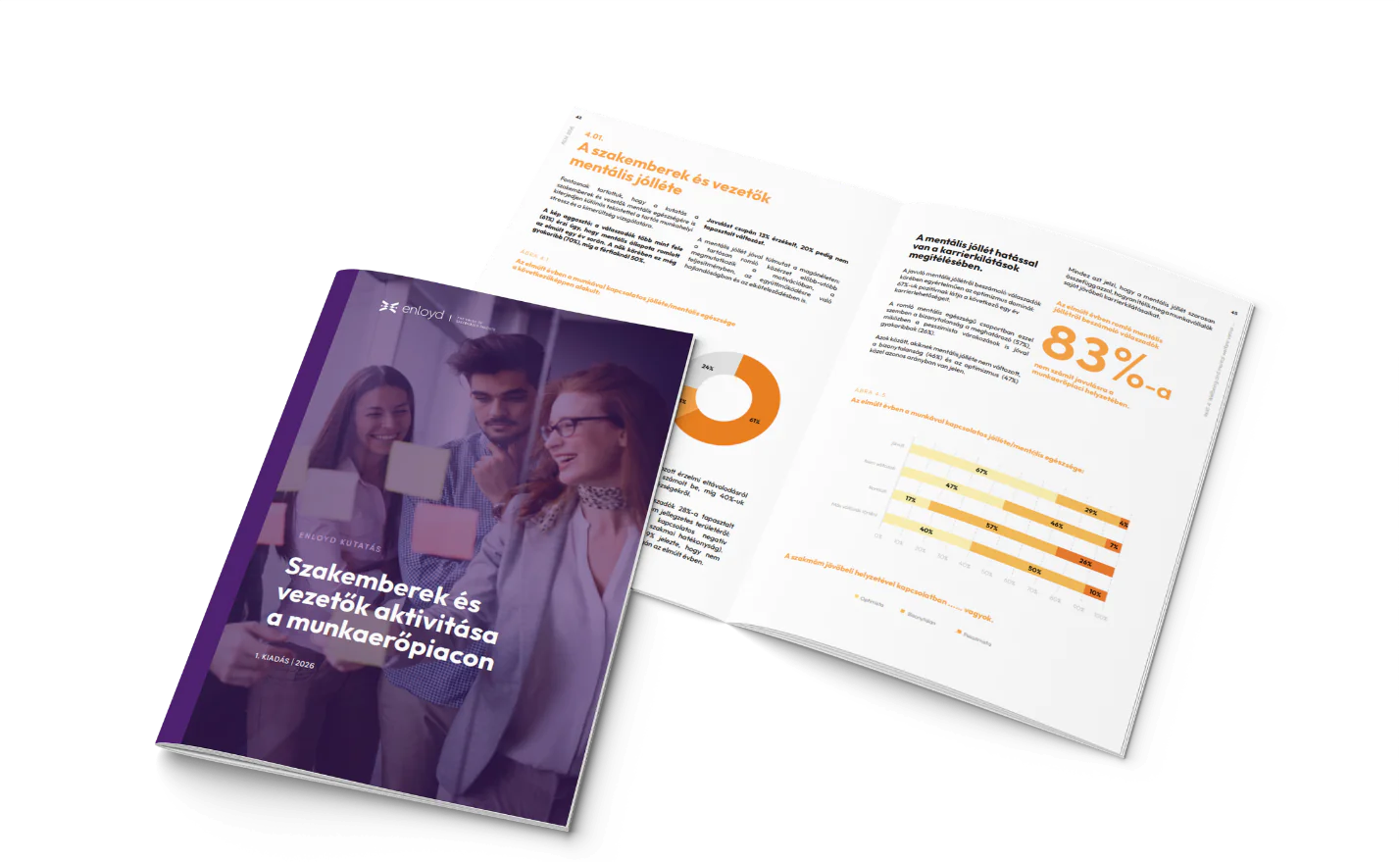
Perhaps the most concerning finding is the state of employees' mental wellbeing. 61% of respondents reported that their mental wellbeing has deteriorated over the past year, rising to 70% among women. Only 3% said they experience no symptoms of burnout at all. The most common issues include exhaustion, persistent fatigue and negative emotions associated with work.
As a result, wellbeing is no longer simply an HR initiative or an employer branding topic. It has a direct impact on performance, engagement and employee retention. According to the survey, professionals working in finance, accounting and marketing are particularly affected by workplace stress.
Employees are adapting to new technologies faster than organisations
The findings also reveal a clear gap between employees' willingness to develop and the support they receive from employers. 93% of white-collar professionals want to improve their digital skills, while 77% are learning independently to keep pace with technological change. Yet only one in three feels adequately supported by their employer.
More than half of respondents view artificial intelligence as an opportunity to improve efficiency, while almost the same proportion express concerns about the lack of regulation and the speed of technological change.
What does this mean for employers?
Enloyd's research suggests that the Hungarian labour market has become more mature. Employees are making more deliberate career decisions, while employers are approaching hiring more strategically. In this environment, competitive pay remains a prerequisite—but it is no longer a competitive advantage on its own.
The organisations that succeed will be those capable of offering a predictable career path, supportive leadership, flexible ways of working and genuine opportunities for professional growth. Retaining talent is increasingly becoming a matter of organisational strategy rather than compensation policy alone.
About the research
Enloyd's Specialists' and Managers' Activity in the Labour Market 2026 report is based on an online survey of 520 white-collar professionals and managers working in Hungary. The research explores perceptions of the labour market, job change motivations, workforce mobility, mental wellbeing, and the impact of digitalisation and artificial intelligence on the world of work.
Published: August 7, 2026 by Réka Borovszky